It is part of the original Major League Soccer playbook: When trying to gain attention, sign someone with a big name.
And few names in soccer are bigger than Zlatan Ibrahimovic, the towering forward from Sweden and veteran of many of the biggest club sides in the world.
He is a different sort of end-of-career MLS import. David Beckham was about fame and a star actor’s mug. Kaka was Brazil’s best player, there for a time. Thierry Henry retained a quiet dignity.
Zlatan (as he prefers to be known) is about goals, but he is also about self-aggrandizement, dust-ups from time to time with teammates, coaches and referees, and he brings to mind the more theatrical late-career imports of the early and desperate MLS years — the Mexican goalkeeper Jorge Campos and the Colombian midfielder Carlos Valderrama.
Ibrahimovic is of that ilk, and at least one columnist decries the sudden lurch from MLS clubs trying to build from within and the fallback position of recruiting a global star to jog around for a season or two.
This is what Zlatan said in a short video released by the MLS:
[Read more →]
Tags:
So many people have elegant signatures. And why not? Even in the Computer Age most of us sign our names often enough to have pretty much perfected a signature.
Know who usually has stylish and perfectly legible signatures? Athletes. Perhaps from giving autographs. (And perhaps from some clubhouse boy with an elegant hand slavishly signing for them, though we prefer not to think about that.)
I admire people who can bang out their signatures time and again, with very little variation.
Because I cannot, for the life of me, produce the same autograph from minute to minute, and it’s embarrassing.
[Read more →]
Tags:
In the U.S., sports fans must be talking about the top-seeded University of Virginia losing tonight to a 16 seed in the NCAA basketball tournament.
A No. 1 seed losing to a 16 had never happened, not in 135 previous encounters, until Virginia succumbed to the University of Maryland, Baltimore County (UMDC) by 20 points tonight.
Which came a few days after famed soccer coach Jose Mourinho, once self-described as “the Special One”, saw his globally famous Manchester United team lose, at home, to Seville, the fifth-best team in Spain, 2-1 — and getting knocked out of the Champions League in the round of 16.
What links those two games?
In each, the team expected to win is known for stressing defense over offense.
It has been a bad week for the notion that “defense wins games”, which suddenly seems in the eclipse across the sports world.
[Read more →]
Tags:
A challenge/request was registered on this site this week, and I concede it probably is time to make some recommendations on wines we like that come from this part of France.
One of the difficulties of doing this is making clear what geographical area this is.
It is not the Cote d’Azur; it is not Provence; it is not the Gard. All three of those areas are north and east of here, closer to Italy and the Alps. It is not part of the Aude or the Tarn, which are south and west of here.
So, where is “here”? It can be called Languedoc, in the most capacious old term. Or Occitanie, in the new capacious term.
But to get about as precise as we can, we will call the area Herault which, as can be seen on the map, is a fairly compact piece of land bordering the Mediterranean, from Montpellier in the east to Beziers in the south, and including in the north the first batch of hills that lead to France’s sprawling interior –Â known as the Massif Central.
Enough geography.
Interest in the Herault area from, say, the English-speaking world, probably has a basis in wine, which is by far the biggest industry of the department — despite (or perhaps because of) its reputation for producing the least expensive wine in France.
We will proceed with two recommendations in each of these categories: white, rose and red, and add one dessert wine. These are local wines we drink that offer great value for money. At least when bought locally.
(Prices listed for each bottle reflect current dollar-euro exchange rates estimates.)
[Read more →]
Tags:

This blog commenced on March 10, 2008. Ten years ago today.
It was four days after I had been fired by the Los Angeles News Group, and I wanted to let co-workers and other journalists know what had happened, with as many specifics as I could recall pertaining to the (then mostly novel) concept of being booted out of the newsroom.
It was a Thursday, around lunch, that I got a call …
I went back and read that post, 10 years hence, and I am struck by a few things.
Oh, and before I get to that … I have made a point of publishing at least one blog post per day for those 10 years.
I may be one or two days short of 10 years — 120 months; 520 weeks; 3,653 days, counting three February 29ths — without interruption; I took down a post a few months ago that I decided was too harsh, and maybe I missed one or two. But I am well over 3,653 posts, because in the early days I often blogged several times a day.
Going forward, however, I will not feel an obligation to file every day. I’m guessing I still will, now and then, but not like the past 10 years — when I was often (often) oppressed by the notion that “I have not blogged yet.” It seemed important to me, forcing myself to write every day, as I had done for the previous three decades.
And it takes a surprising (still, to me) amount of time even to blog-not-very-well, which many of you will have noticed.
So, October 10, 2008, from the perspective of 3,653 days ago:
[Read more →]
Tags:
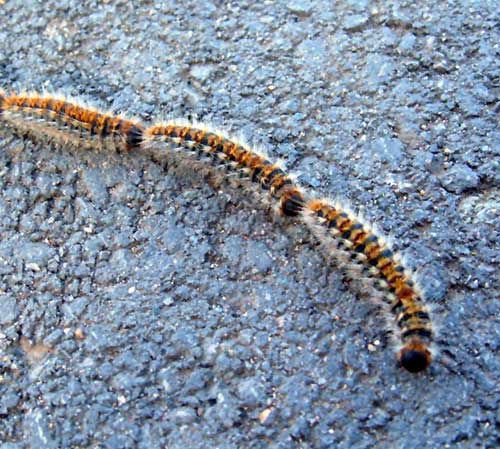
Well, in theory, they could be killers. But they are more likely to make your dog or cat sick.
Caterpillars!
Processionary caterpillars, they are called.
They are some nasty customers who live here in the south of France, and in southern Europe, in general.
They are destructive to pine trees, where they spend much of their lives eating pine needles, but that is only part of the problem.
[Read more →]
Tags:
The best opening sentences in literary history. Always a fun exercise.
This has been going on pretty much forever. An early leader for “best opening line” has to be Genesis chapter 1, verse 1.
“In the beginning, God created the heaven and the earth.”
There’s a book you want to check out, just from the start, right? It’s a bestseller. First sentences matter!
The London Times has turned out a list of 25 opening lines, and to keep those of us who were not English-lit majors from throwing up our hands and moving on … The Times has made it a multiple-choice test.
We are challenged to identify what The Times calls the “The 25 best first lines. Ever.”
Answers are below the questions, so may want to keep track of your choices on a piece of paper.
FYI. I got about six or seven of these, and a few were from context. I was dead sure of maybe three or four.
Here we go!
Warning: This skews British.
1. “Once upon a time and a very good time it was there was a moocow coming down along the road and this moocow that was coming down along the road met a nicens little boy named baby tuckoo.”
a)Â A Portrait of the Artist as a Young Man by James Joyce
b) Where’s My Cow? by Terry Pratchett
c) Animal Farm by George Orwell
2. “The artist is the creator of beautiful things.”
a) The Moon and Sixpence by W Somerset Maugham
b) The Picture of Dorian Gray by Oscar Wilde
c) The Story of Art by EH Gombrich
3. “Now, what I want is, Facts.”
a) Hard Times by Charles Dickens
b) A Tale of Two Cities by Charles Dickens
c) The Small House at Allington by Anthony Trollope
4. “There were four of us — George and William Samuel Harris, and myself, and Montmorency.”
a) The Diary of a Nobody by George and Weedon Grossmith
b) Five Go to Smuggler’s Top by Enid Blyton
c) Three Men in a Boat by Jerome K Jerome
5. “Until he was four years old, James Henry Trotter had a happy life.”
a) The Magic Mountain by Thomas Mann
b)Â James and the Giant Peach by Roald Dahl
c) White Fang by Jack London
6. “Titus is seven.”
a) Titus Andronicus by William Shakespeare
b) Gormenghast by Mervyn Peake
c) I, Claudius by Robert Graves
7. “Call me Ishmael.”
a) Moby-Dick by Herman Melville
b) Robinson Crusoe by Daniel Defoe
c)Â The Cat in the Hat by Doctor Seuss
8. “As I walked through the wilderness of this world, I lighted on a certain place, where was a den; and I laid me down in that place to sleep; and as I slept I dreamed a dream.”
a) Frankenstein by Mary Shelley
b) Paradise Lost by John Milton
c) The Pilgrim’s Progress by John Bunyan
9. “‘There’s no such thing as a perfect murder,’ Tom said to Reeves.”
a) A Study in Scarlet by Arthur Conan Doyle
b) Ripley’s Game by Patricia Highsmith
c) The Mysterious Affair at Styles by Agatha Christie
10. “My father had a small estate in Nottinghamshire; I was the third of five sons.”
a) Sons and Lovers by DH Lawrence
b) Little Lord Fauntleroy by Frances Hodgson Burnett
c) Gulliver’s Travels by Jonathan Swift
11. “All children, except one, grow up.”
a) Swallows and Amazons by Arthur Ransome
b) Peter Pan by JM Barrie
c) The Doubtful Guest by Edward Gorey
12. “It is a truth universally acknowledged, that a single man in possession of a good fortune, must be in want of a wife.”
a) Pride and Prejudice by Jane Austen
b) Sense and Sensibility by Jane Austen
c) Northanger Abbey by Jane Austen
13. “Stately, plump Buck Mulligan came from the stairhead, bearing a bowl of lather on which a mirror and a razor lay crossed.”
a) Bonfire of the Vanities by Tom Wolfe
b) The Amber Spyglass by Philip Pullman
c) Ulysses by James Joyce
14. “The boy with the fair hair lowered himself down the last few feet of rock and began to pick his way towards the lagoon.”
a) Lord of the Flies by William Golding
b) The Prisoner of Zenda by Anthony Hope
c) Coot Club by Arthur Ransome
15. “It was the afternoon of my eighty-first birthday, and I was in bed with my catamite when Ali announced that the archbishop had come to see me.”
a) The Gruffalo by Julia Donaldson
b) Of Human Bondage by W Somerset Maugham
c) Earthly Powers by Anthony Burgess
16. “That old bell, presage of a train, had just sounded through Oxford Station; and the undergraduates who were waiting there, gay figures in tweed or flannel, moved to the margin of the platform and gazed idly up the line.”
a) Brideshead Revisited by Evelyn Waugh
b) Zuleika Dobson by Max Beerbohm
c) Lucky Jim by Kingsley Amis
17. “It was a bright cold day in April, and the clocks were striking thirteen.”
a) Nineteen Eighty-Four by George Orwell
b)Â Northern Lights by Philip Pullman
c) Brave New World by Aldous Huxley
18. “There was no possibility of taking a walk that day.”
a) Jane Eyre by Charlotte Brontë
b) Sense and Sensibility by Jane Austen
c) Wuthering Heights by Emily Brontë
19. “Roger, aged seven, and no longer the youngest of the family, ran in wide zigzags to and fro, across the steep field that sloped up from the lake to Holly Howe, the farm where they were staying for part of the summer holidays.”
a) It Shouldn’t Happen to a Vet by James Herriot
b) Stig of the Dump by Clive King
c) Swallows and Amazons by Arthur Ransome
20. “The Past is a Foreign Country; they do things differently there.”
a) The End of the Affair by Graham Greene
b) The Go-Between by LP Hartley
c) The Code of the Woosters by PG Wodehouse
21. “Into the face of the young man who sat on the terrace of the Hotel Magnifique at Cannes there had crept a look of furtive shame, the shifty, hangdog look which announces that an Englishman is about to talk French.”
a) The Luck of the Bodkins by PG Wodehouse
b) Scoop by Evelyn Waugh
c) The Old Devils by Kingsley Amis
22. “In my younger and more vulnerable years my father gave me some advice that I’ve been turning over in my mind ever since.”
a) The Great Gatsby by F Scott Fitzgerald
b) My Brilliant Friend by Elena Ferrante
c) A Visit from the Goon Squad by Jennifer Egan
23. “We slept in what had once been the gymnasium.”
a) The Loneliness of the Long Distance Runner by Alan Sillitoe
b) The Handmaid’s Tale by Margaret Atwood
c) The Colour of Magic by Terry Pratchett
24. “My name is Kathy H. I am thirty-one years old, and I’ve been a carer now for over eleven years.”
a) The Woman Who Walked Into Doors by Roddy Doyle
b) Never Let Me Go by Kazuo Ishiguro
c) The Sense of an Ending by Julian Barnes
25. “It was a queer sultry summer, the summer they electrocuted the Rosenbergs, and I didn’t know what I was doing in New York.”
a) The Bell Jar by Sylvia Plath
b) On the Road by Jack Kerouac
c) The Very Hungry Caterpillar by Eric Carle
Answers
1. a) A Portrait of the Artist as a Young Man, Joyce’s first novel
2. b) The Picture of Dorian Gray, Wilde’s only novel
3. a) The words are spoken by the utilitarian school board superintendent Thomas Gradgrind
4. c) Jerome began the book intending to write a serious travel guide. He ended up with a comic novel
5. b) Dahl originally intended to write about a giant cherry
6. b) Titus Groan becomes the 77th Earl of Groan and Lord of Gormenghast Castle at the age of seven
7. a) Melville dedicated his book to Nathaniel Hawthorne, author of The Scarlet Letter
8. c) First published in 1678, Bunyan’s book has never been out of print
9. b) The book is the third in Highsmith’s series about her elusive antihero, Tom Ripley
10. c) Swift’s idiosyncratic satirical style gave the world the term “Swiftian”
11. b) Peter Pan first appeared in Barrie’s novel The Little White Bird. The later chapters of this book became Peter Pan in Kensington Gardens
12. a) Austen’s second novel was published anonymously, by “The Author of Sense and Sensibility”
13. c) Mulligan is performing a parody of the Roman Catholic Mass
14. a) Golding’s book was inspired by his time working as a schoolteacher
15. c) The book’s hero, Kenneth Toomey, is allegedly loosely based on Somerset Maugham. No gruffalos feature
16. b) All of Oxford’s undergraduates fall in love with Zuleika and kill themselves in her honour
17. a) Orwell’s dystopian novel is set in Airstrip One, formerly known as Great Britain
18. a) Charlotte Brontë published her novel under a male pseudonym, Currer Bell
19. c) Daddy famously advises his boating children by telegram: “BETTER DROWNED THAN DUFFERS IF NOT DUFFERS WON’T DROWNâ€. They did parenting differently in the 1920s
20. b) Young Leo carries notes between aristocratic Marian and rustic Ted. But they’re more than just friends
21. a) The book’s hero, dapper Monty Bodkin, is a recurring Wodehouse character. He first appears as Lord Emsworth’s secretary in the Blandings novel Heavy Weather
22. a) And the famous last line: “So we beat on, boats against the current, borne back ceaselessly into the past.”
23. b) Atwood’s novel was adapted for television by Hulu last year
24. b) Ishiguro won the Nobel prize in literature last year
25. a) Plath published her only novel under the pseudonym Victoria Lucas
Tags:
In The Los Angeles Times, columnist Bill Plaschke has done a laudable thing:
Hold the Dodgers accountable for the club’s lack of TV exposure in most of its home market.
[Read more →]
Tags:
That’s what it is — a “scandal”, yes?
By definition: “An action or event that is regarded as morally or legally wrong and causing general public outrage.”
It is not a “problem”. It is not an “issue”.
It is one big, fat, ugly scandal that is the shame of the National Basketball Association:
Teams choosing to lose — to improve the odds of their getting a higher draft pick, come June.
The most basic of assumptions when watching a sports event — that the participants are doing their best to win — is no longer valid, in many NBA games.
One might think the cries of “something must be done!” would wake league president Adam Silver from his reverie. And maybe it has. A little.
[Read more →]
Tags:
This part of France is given over almost entirely to vines. A smattering of olive trees. A field of grain, here and there. Almost zero significant industry.
In terms of consumption, this ought to be wine country, and it is … but not as uniformly as it might have been a century ago.
Beer is a French thing, and has been for a long time, as domestic brands like 1664 and Pelforth demonstrate. And now the craft beer fad is rolling over the country, as well.
One of the more popular anglophone wine shops in the area has added beer tastings to its schedule, and got an enthusiastic turnout recently for a flight of 10 dark beers, all from Europe, most from Belgium.
Including a couple of Trappiste offerings — already well-known in international beer circles.
And something named Straffe Hendrik Quadruple, which I just now drank for the first time since the “10-dark” tasting.
Looking back at my ratings sheet, I gave it an 8.5 on a scale of 10. Which was madness, now that I have had one whole 33-centiliter bottle of it.
I gave an 8.5 rating to a beer I noted to be “yeasty and foamy”? I must have been drinking.
[Read more →]
Tags: